
MENU
Anxiety over when and where to open a printed Bible, coupled with a lack of training, creates a state of spiritual hunger for pastors and their churches.
Across Central Asia, Christians are conscious of actions that could draw government scrutiny. Scrutiny leads to questions. Questions can result in regulatory pressure on the church. Central Asians know this kind of oppression through regulation all too well.1
Pastors have explained that a book in hand draws government suspicion, and travelers are searched. So the joy of Bibles recently printed in local languages is mixed with fear.
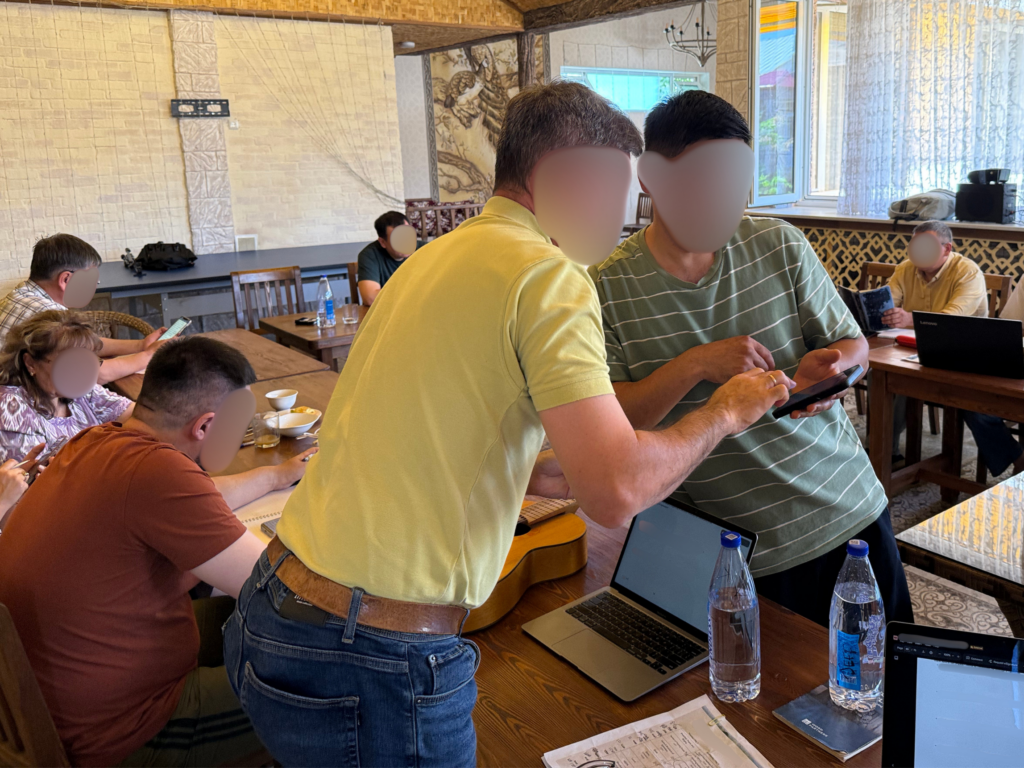
Scrolling through the text together
In order to avoid unwanted investigation of their churches, pastors often limit themselves to studying the Scriptures through the scrolling light of their phones. Swiping through pages of the Bible creates significant barriers to study, especially when pastors are trying to understand the overarching message of a book or passage.
Educational challenges further complicate the task for these pastors. A number of the men we have trained had little education when they came to faith. They entered their first WordPartners workshop without previous training. As Pastor Mehmet* explained, “I wanted to preach [narratives] accurately. I didn’t have any formal training. My parents didn’t have money to send me to school . . . When I received Jesus at twelve, that’s when I learned to read and write. I always wanted to preach. But I had a hard time; I had less words.”
Anxiety over when and where to open a printed Bible, coupled with a lack of training, creates a state of spiritual hunger for pastors and their churches. Another pastor, Ivan*, described the practical result: “We used to preach with a lot of empty words.” Despite loving God’s Word deeply, Mehmet and Ivan struggled to know how to preach it. That was before they attended their first workshops.
Reflecting on his experience in our Core Training, Pastor Mehmet recounted with thankfulness, “When I came here for the first time, I started to understand how to preach. I love the things that I have learned here.” His experience echoes what we hear from many other pastors encountering the WordPartners training for the first time.
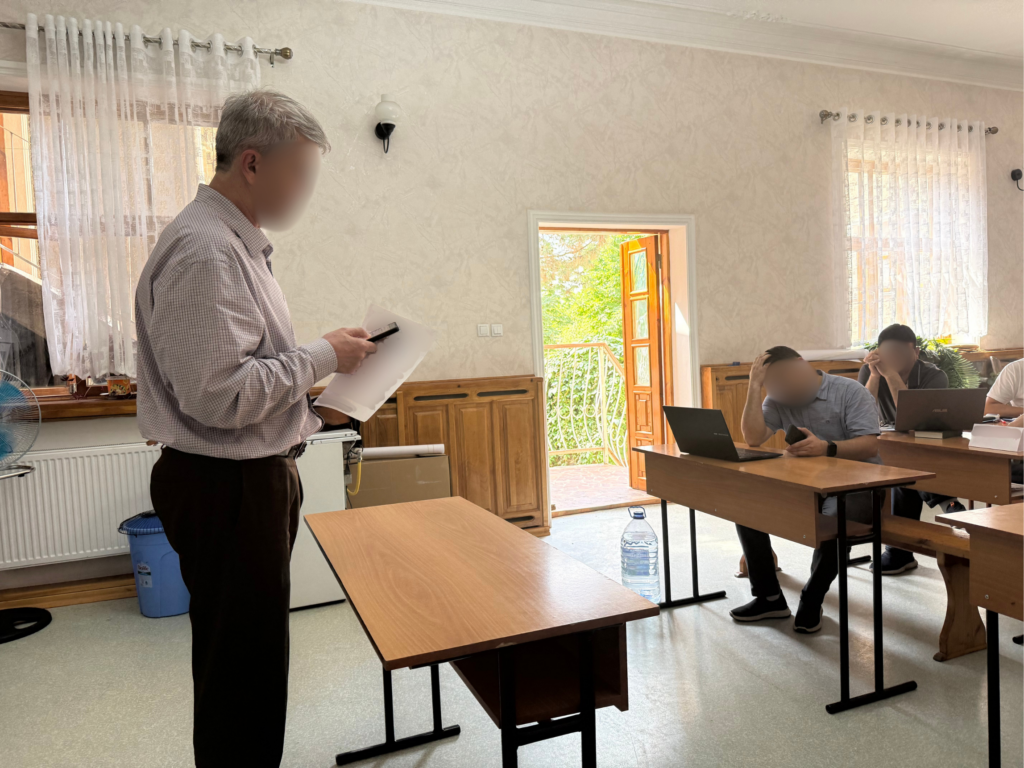
Leading a Do Session from Mark 11:1–25
While sermon preparation on a phone will always be a challenge, the principles of Genre and Structure help pastors organize what they read in a way that leads to a clearer sermon. Pastor Ivan explained the impact of the principles on his church: “Now we can feed people. When someone has repented, we now begin to help them learn how to study the Word, so they can grow.” This is the result of workshops designed to educate pastors with easy-to-understand tools that help them find their words in the Word.
When the early church faced “a great persecution,” Luke tells us that two things happened: God’s Word spread through “preaching” and “there was much joy” in the power accompanying the Word (see Acts 8:1–8 ESV). WordPartners can’t alleviate the oppression or fix the educational challenges that churches face in Central Asia at the hands of post-Soviet authoritarian governments. But we are providing a way for pastors to feed their churches on the preaching of the Word. By God’s grace, the preaching of the Word will result in much joy across Central Asia and beyond.
Central Asia is one of the many places where God is using WordPartners to equip pastors to preach Christ-centered, expositional sermons. These pastors are multiplying the training by teaching their own people to study the Bible with the same principles they learned in our workshops. About $33 a month carries one pastor through a year of training. Will you stand with us today?
*Names changed for security.
1 Missionary researcher Justin Long explains this phenomenon of oppression by government regulation: “Governments are killing Christians far less than they used to be. Some states are even arresting less (although arrests obviously still happen). Instead, they’re turning to regulation – control of religion that is urbane, peaceful, rational, and for the good of society.” (Justin Long, “ΚΎΡΙΟΣ ἸΗΣΟΥ͂,” in My Column, accessed August 21, 2026.)